
By Jan Rehaag
Press freedom in Georgia has declined sharply over the past five years. In an interview, former Reuters journalist Margarita Antidze calls the situation the worst she has seen in her 30-year career.
Project 64 is a small independent media outlet based in Georgia’s capital, Tbilisi. Well known among young Georgians, it focuses on explanatory journalism through visual storytelling.
But the last three years have been a fight for survival, says Margarita Antidze, a journalist with Project 64 and former Reuters correspondent.
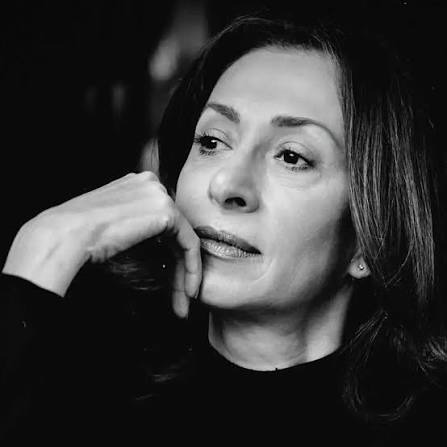
Margarita Antidze, journalist at Project 64. Photo: Courtesy of Margarita Antidze
“Many of our colleagues, many media outlets didn’t survive. They were closed down. And those who are still in place, they are like us, surviving,” she says.
Antidze, who worked as a senior correspondent for Reuters for over 20 years, says she has never seen a worse time for the free press in Georgia.
In the past three years, the Georgian government has launched what she calls an “unprecedented crackdown on independent media”.
Starved of funds
The Georgian Dream party, founded by billionaire Bidzina Ivanishvili, has been ruling Georgia since 2012. But it has recently come under fire for allegedly eroding democracy and pursuing what many call a pro-Russian path.
Amnesty International accused the Georgian government in 2026 of “weaponising the police, courts, the law, and press to crush dissent”, and Reporters Without Borders’ press freedom index now ranks Georgia 135th out of 180 countries, down from 60th in 2021.
Since 2024, Georgian Dream has passed a series of new laws, among them the controversial Law on Transparency of Foreign Influence, widely referred to as the “Foreign Agents Law”.
The legislation forces media outlets that get more than 20 per cent of their funding from abroad to register as foreign agents, but has been expanded further since, requiring government approval to take any foreign grants.
Those who don’t comply risk heavy fines or even up to six years in prison.
Critics draw parallels to Russia, which passed a similar law in 2012 and has since used it to crush independent media and civil rights.
For Georgia’s independent media, the foreign agents law and other legislation have choked off funding from abroad – in a country where the media sector has largely relied on foreign grants.
Combined with US President Trump cutting USAID funding, the biggest donor to many outlets in the country, Georgian media has struggled to fund its operations, with some calling it an “extinction-level event”.
The Georgian government has insisted the new legislation makes the media more transparent and reduces foreign influence.
But Antidze says Project 64’s donors never interfered in its editorial policy. Without foreign grants, she doesn’t know whether the outlet will be able to continue paying its employees.
Heading away from Europe
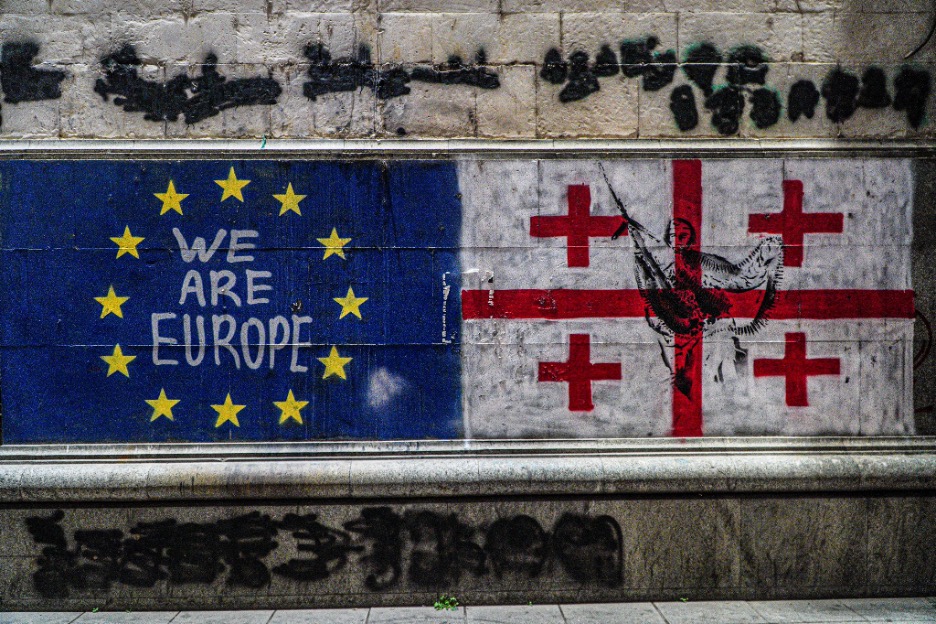
Georgia has been a partnership country with the European Union since 1996. But its path to the EU has been on ice since 2024, after Brussels said the foreign agents law had brought accession to a de facto halt.
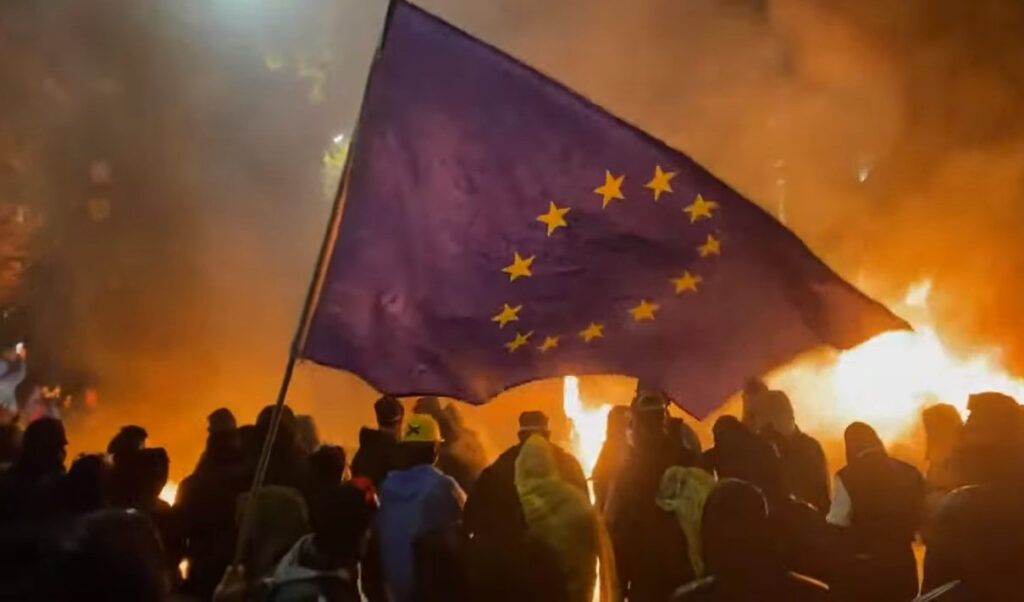
Protesters with an EU flag in front of burning barricades in Tbilisi, 2 December 2024. Photo: Kanal13 / Wikimedia Commons, CC BY-SA 3.0
In November 2025, EU foreign policy chief Kaja Kallas called Georgia “a candidate country in name only”.
Twenty per cent of Georgia has been occupied by Russia since a brief 2008 war, and joining the EU is written into the Georgian constitution. A 2026 survey found that 71 per cent of Georgians support EU integration.
After the government suspended EU accession efforts until 2028, widespread protests erupted, with protesters calling on the government to reverse course.
“We had many cases, journalists being beaten, injured, ending up in the hospitals and having serious injuries,” Antidze says.
But the protests have had little to no effect and have since declined in size, also because the government introduced heavy fines for “blocking the road”.
Antidze says many people have lost hope that change is possible, and that real political change also needs a strong opposition.
“[But that’s] impossible because many political leaders and activists are now in prison,” she argues.
A shadow ruler?
The opposition has alleged that Bidzina Ivanishvili, a Georgian billionaire and the founder of the ruling Georgian Dream party, is behind the shift away from the EU and towards Russia.
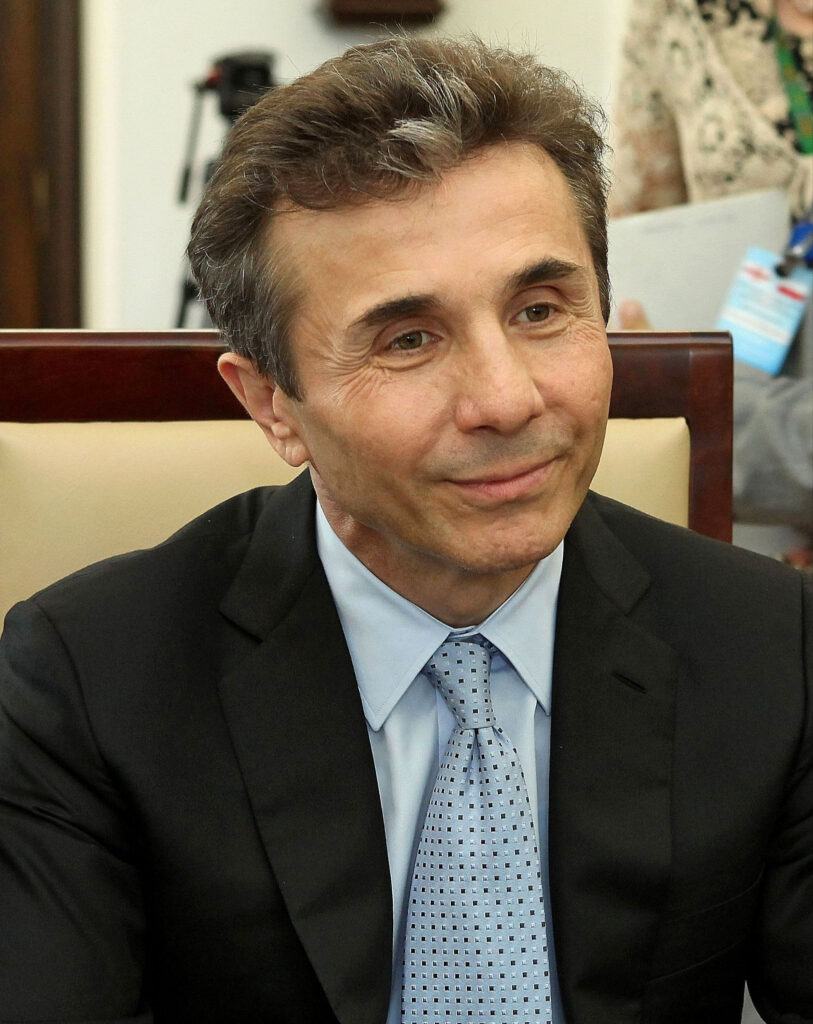
Bidzina Ivanishvili in 2013. Photo: Michał Koziczyński / Wikimedia Commons, CC BY-SA 3.0
Ivanishvili, who made his fortune in Russia in the 1990s, holds no state office and is officially only Georgian Dream’s honorary chairman. But many believe he still wields real power behind the scenes.
“We have a very, I would say, unique situation when the country is de facto ruled by former Russian oligarch […] Bidzina Ivanishvili. […] He’s making all key decisions in the country; the government, this party, all depend on him,” Antidze explains.
“It’s a unique situation because legally this person is no one; he’s just a citizen of Georgia. He is not a prime minister or president or minister,” she adds.
Georgian Dream denies that Ivanishvili rules from the shadows. “Giving advice does not mean informal governance,” party leader Irakli Kobakhidze said in 2023.
Ivanishvili was sanctioned by the US government in December 2024 for “actions or policies that undermine democratic processes or institutions”, taken “for or on behalf of, or for the benefit of, directly or indirectly, the Government of the Russian Federation”.
An uncertain future
Whether Project 64 will be able to survive the coming years is uncertain.
“If you would tell me a couple of years ago that this legislation, those restrictions would be in place in Georgia, I would say no, no way, it’s impossible. Because Georgia was always known as a post-Soviet country which is striving for freedom, for a Western course. And now we are facing this very sad reality.”
While she isn’t scared to get arrested for speaking out, she says it’s always a possibility:
“I do not rule out anything. It might be me or my colleagues tomorrow.”